



Regulation and compliance
Stay informed on pharmaceutical regulation and compliance, including GMP requirements, regulatory guidance, inspections, quality systems, data integrity and global standards that help manufacturers meet evolving expectations and maintain market access.
Webinars and whitepapers
- Previous
- Next


















Regulation and compliance

PPWR compliance for healthcare packaging: no time to waste
For pharmaceutical and medical device companies, Europe’s new packaging rules turn sustainability from a corporate ambition into a design, evidence and change-control discipline. Compliance will take patience, practice and partnerships.

European Pharmaceutical Review Issue 2 2026
EPR Issue 2 includes articles on manufacturing, drug formulation, microbiology, downstream bioprocessing, and more.
Pharma plants cannot be designed and built like at the start of the century
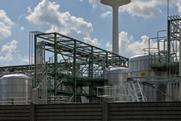
In this interview, Adam Cross from Octave explains why pharma construction and information management can no longer be siloed activities, and advises how companies can hit the ground running from design through to operations.

Testo at CPHI 2026 in Milan: digital monitoring for the pharmaceutical industry
At CPHI 2026, Testo will showcase digital solutions for monitoring, compliance, and supply chain transparency in the pharmaceutical industry.
Join now
Unlock exclusive industry insights
- Bookmark articles and resources to access anytime
- Enjoy free access to industry leading resources, webinars and insights
- Stay informed with the latest news and breakthroughs in drug discovery
- Receive updates and recommendations tailored to your research interests

Nitrosamines: from detection to understanding
Manufacturers are facing a new generation of nitrosamine challenges as NDSRIs demand more sophisticated analytical and risk management strategies.

Strengthening regulatory consistency - why predictability matters rather more than speed
Regulatory predictability has become an increasingly important factor in determining where clinical development takes place. Drawing on lessons learned from delivering complex programmes across Europe, Regeneron’s Dr Muriel O’Byrne explores how greater consistency can help sponsors maximise value.

To grow, pharma manufacturers need operations that scale - not just acquisitions
As patent cliffs threaten hundreds of billions in drug revenues and M&A activity reshapes the industry, the companies best placed to capitalise on pharma’s great reshuffling will be those that have standardised their manufacturing operations, unified their asset management and integrated quality systems capable of satisfying an increasingly demanding multi-regulator environment.

Redefining the standard for recessed lighting in the pharmaceutical industry
Pharmaceutical and chemical manufacturing facilities present some of the most demanding lighting challenges in industry, combining explosive atmospheres, stringent hygiene requirements and complex regulatory requirements. Raytec examines how explosion-protected LED solutions are redefining safety, performance and compliance across hazardous area applications.

The next frontier in nitrosamine testing: detection and risk assessment in packaging and IV infusion bags
Join Waters Corporation on the 23rd September for their webinar on the latest developments in nitrosamines testing, evolving regulatory expectations, analytical challenges, and advanced LC-MS/MS strategies for sensitive detection and risk assessment.

Closing the data integrity gap in pharmaceutical quality control
Pharmaceutical quality control laboratories face growing pressure to strengthen data integrity as regulators scrutinise incomplete records, manual data entry, and disconnected systems.

Closing the last mile: the key to fully unlocking healthcare value in Europe
Giancarlo Benelli reflects on why Europe must capitalise on its strong innovative drug discovery infrastructure by shoring up the last mile and attracting clinical trials back to Europe’s healthcare systems.

What’s changing in AI regulation for drug development
Regulatory experts from Veeva Systems share how life sciences organisations are turning their focus from experimentation to building AI that stands up to regulatory scrutiny.

Medicines as strategic assets: the new politics of pharma supply
Ahead of CPHI Americas in June, Sherma Ellis Daal explores how informed, cross-sector dialogue in the pharmaceutical supply chain can help navigate an increasingly complex global system.

Adopting an AI-driven approach to scale with confidence
Exploring how mid-size pharma can meet European regulatory expectations without rebuilding infrastructure.

Pharma Horizons: Cell and Gene Therapy
EPR’s 2026 cell and gene therapy report covers the key developments in manufacturing, regulation, drug delivery, process development and beyond.

The Bayesian Edge: how the new FDA guidance is enabling nimble, efficient clinical trials
Dr Stacy Lindborg, CEO of IMUNON, reflects on the FDA’s recent draft guidance that promotes the use of Bayesian modelling in clinical trials.

European Pharmaceutical Review Issue 1 2026
EPR Issue 1 includes articles on manufacturing, drug delivery, environmental monitoring, analytical techniques and more.

European Pharmaceutical Review Issue 4 2025
EPR Issue 4 includes articles on manufacturing, AI/ML, vaccine development, biologics and more.

Why speed and flexibility matter now more than ever
The balance between speed, scale, and compliance has never been more critical. As GLP-1s, biosimilars, and advanced therapies reshape global priorities, pharma leaders face a new question: how can manufacturing infrastructure evolve fast enough to keep pace?
Drug development In-Depth Focus 2025
From groundbreaking cell and gene therapies to cost-effective drug delivery innovations, Europe is emerging as a hub for life-changing therapies. Explore expert insights and innovative solutions shaping the pharmaceutical industry.

Guide to Outsourcing 2025
Doug Botkin, PhD Scientific Portfolio Specialist from Charles River Laboratories, examines how modern microbial ID tools can enhance contamination control strategies and the benefits an outsourcing partner can provide.

European Pharmaceutical Review Issue 3 2025
EPR Issue 3 includes articles on microbiology, downstream processing, manufacturing, drug formulation and more.
Scaling for the GLP-1 revolution - meeting global injectable demand
In this article, Miguel Angel Ortega Sánchez of ROIS explores how the industry is adapting to new delivery formats, device bottlenecks, and strategic partnership models — and why flexibility, compliance, and tech transfer agility are now critical to success.

Resilient supply, reliable care: safeguarding Europe’s generics in an uncertain world
In this article, Michal Nitka, Senior Vice President, Head of Generics Europe & Global Head OTC, Teva Pharmaceuticals, outlines how policy reform, digital innovation, and manufacturing resilience can secure sustainable access to essential treatments - ensuring generic medicines remain a cornerstone of equitable, reliable care.

AI Act: data governance and compliance strategy implications in Pharma
In this article, Patrice Navarro, Tech Partner (Healthcare & Life Sciences Sector), Clifford Chance, discusses the AI Act and the related compliance considerations for pharmaceutical companies in the EU.
Amid FDA turmoil Sarepta’s gene therapy worries begin to ease
But the impact of George Tidmarsh’s CBER appointment after Vinay Prasad’s abrupt resignation remains to be seen.

Pharma Horizons: leading-edge formulation
This report addresses the key factors shaping pharmaceutical formulation, including regulation, QC and analysis.

A rapid microbiological method case study for advanced therapy medicinal products
In this article, Stacey Ramsey, Senior Manager – Microbial Applications Lab, Charles River Laboratories, discusses the modernisation of rapid microbiological methods (RMMs) and the potential of ATP-bioluminescence when testing cell-based products.