



Digital and Pharma 4.0
Latest content
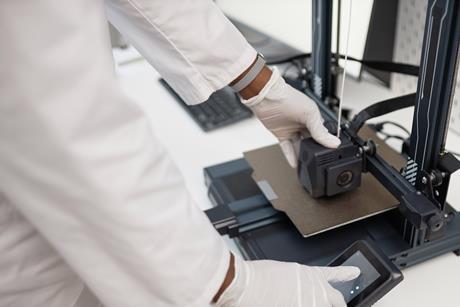
European Pharmacopoeia launches working party for 3D-printed medicines
The new group will develop pharmacopoeial quality standards for 3D-printed medicinal products, reflecting the technology’s growing role in personalised medicine manufacturing.
Join now
Unlock exclusive industry insights
- Bookmark articles and resources to access anytime
- Enjoy free access to industry leading resources, webinars and insights
- Stay informed with the latest news and breakthroughs in drug discovery
- Receive updates and recommendations tailored to your research interests

European Pharmaceutical Review Issue 2 2026
EPR Issue 2 includes articles on manufacturing, drug formulation, microbiology, downstream bioprocessing, and more.

The Lab of the Future: from connected data to predictive, intelligent operations
Data abundance alone does not equal intelligence within the digitized pharmaceutical laboratory. The next frontier demands connected systems, embedded AI governance and predictive capabilities that turn scientific data into actionable business insight.

CPHI Milan 2026 preview: key themes and emerging trends
Explore seven expert perspectives on the technologies and challenges shaping the future of pharmaceutical development and manufacturing.

CPHI Pharma Awards 2026 finalists announced
Winners of this year’s awards will be revealed during the opening of CPHI Milan 2026.
Digital and Pharma 4.0
 Article
Thermal assurance as an operating model: why the pharmaceutical cold chain must evolve beyond visibility
Real-time monitoring has become standard practice in temperature-controlled distribution. The differentiator now is whether organisations can convert signals into decisions early enough to prevent excursions, reduce waste and strengthen resilience. As Vijay Paliwal, Vice President, Global Advanced Solutions & Customer Experience at Cold Chain Technologies explains, that shift is driving a new operating model for cold chain management: thermal assurance.
 Article
Adopting an AI-driven approach to scale with confidence
Exploring how mid-size pharma can meet European regulatory expectations without rebuilding infrastructure.
 Opinion
Process Raman spectroscopy: closing biomanufacturing’s measurement infrastructure gap
The biopharmaceutical industry has embraced Pharma 4.0 concepts, but the measurement infrastructure required to realise autonomous facilities and continuous bioprocessing remains underdeveloped. Process Raman spectroscopy offers continuous, non-destructive monitoring at frequencies aligned with cell culture dynamics, bridging the gap between control system capabilities and available data.