


Research has highlighted a potential oral drug delivery approach using Quality by Design (QbD) principles to improve treatment of the colonic disease diverticulitis.

A study has reported an approach for optimising metronidazole colonic delivery systems, to increase their potential efficacy when treating diverticulitis.
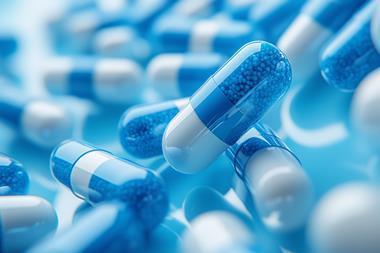
Researchers developed intestinal colon-coated sustained-release matrix metronidazole tablets, using a Quality by Design (QbD) approach.
Arévalo-Pérez et al. noted that metronidazole is a synthetic nitroimidazole and has activity against anaerobic bacteria. Maximising release of metronidazole in the colon “is crucial for effective treatment of diverticulitis, preventing systemic absorption and potential associated side effects”, they explained.
The feasibility of developing a metronidazole drug delivery system for preventing “high premature drug release in the upper GI [tract] and achieve maximum drug concentrations at the [diverticulitis] infection site” was investigated.
For the tablets under investigation, direct compression and tablet coating were the manufacturing processes used. The paper reported that during the latter process, the tablet core was coated with a functional polymer layer to control drug release in “either a pH-dependent or time-dependent manner”.
Hydroxypropyl methylcellulose (HPMC) and chitosan (CH) were the primary hydrophilic polymers, according to the paper.
Metronidazole study findings
The results showed that factors such as “HPMC/chitosan ratio, blending time, coating polymer, and coating weight gain” significantly impacted drug release.
the QbD method applied in the study is a robust tool for designing controlled-release dosage forms for oral administration such as colonic release formulations"
According to the data, “batches with a 10 percent weight increase and varied HPMC viscosity grades and coating polymers [attained] ∼50 percent drug release at 24 [hours]”.
Conversely, slow release of metronidazole occurred in batches “with a 20 percent weight increase along, with either high proportions of HPMC and short blending times or low proportions of HPMC and longer blending times”, the paper reported.
Arévalo-Pérez et al. concluded that the QbD method applied in the diverticulitis-focused study is a robust tool for designing controlled-release dosage forms for oral administration such as colonic release formulations.
This pre-proof paper is for publication in the European Journal of Pharmaceutical Sciences.