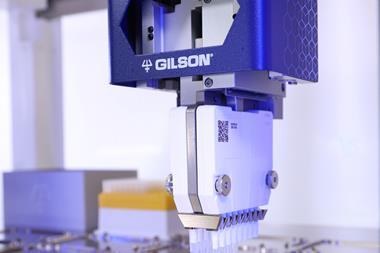



The technology could offer defect-free, high-efficiency ceramic-based water filtration through ultra-precise control of nanopores and surface structure.
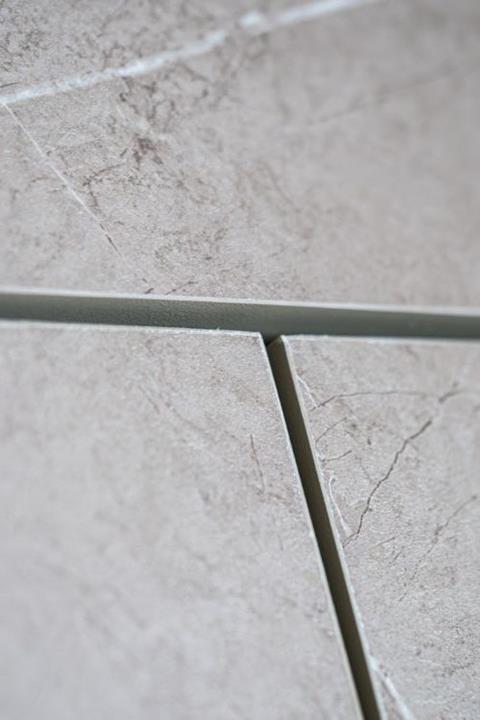
A novel manufacturing process involving high-efficiency ceramic filters can precisely filter water contaminants even under low-pressure conditions, a study has found.
Researchers in Korea have developed next-generation water-treatment membranes capable of simultaneously controlling both micropores and process defects.
The technique is environmentally friendly, simplifies processes and has high energy efficiency compared to conventional water-treatment membranes.
Dr Hong-Ju Lee, the study’s principal investigator, said: “The significance of this work lies in securing both low-pressure-operable material technology and a manufacturing process capable of implementing it without defects.”
Specifically, Naseer et al.’s innovative technique, known as mutual doping, “enhances interparticle bonding by mixing particles from different layers, along with a Co-sintering process that fires all layers simultaneously”.
They added: “The sintering temperature – previously around 1,300°C – was reduced to approximately 1,000°C, while improving particle sinterability to achieve a dense and robust ceramic structure even at lower temperatures.”
The team achieved an ultra-flat ceramic surface that reduced surface roughness by over fifty percent, facilitating a manufacturing process that suppressed crack formation in the separation membrane.

Development of an ultra-flat, defect-free nanofiltration membrane fabrication technology that eliminates surface roughness and cracks. Credit: Korea Institute of Materials Science (KIMS)[/caption]
Moreover, the membrane removed over 99.8 percent of dyes from dye-containing wastewater “while selectively allowing salt ions to pass through, even at low pressures comparable to tap-water conditions”.
[The technology] broadens the scope of water treatment from simple contaminant removal to resource recovery"
The innovative technology broadens the scope of water treatment “from simple contaminant removal to resource recovery”, the authors said.
Importantly, the study by Naseer et al. provides insight into guiding top-layer coating design and fabrication of ceramic membranes for water filtration. The co-sintering method is critical for preparing defect-free top-layer coatings.
The team are currently focused on scale-up studies and plan to conduct pilot-scale demonstrations of their novel technology and manufacturing process for water nanofiltration with ceramic membranes.
The research was published in Journal of Membrane Science.