RNAi - Articles and news items

microRNA manipulation as a host-targeted antiviral therapeutic strategy

Latest issue / 13 December 2011 / Nouf N. Laqtom, University of Edinburgh & King Abdulaziz University and Amy H. Buck, University of Edinburgh

microRNAs (miRNA) are a class of non-coding RNA that regulate the precise amounts of proteins expressed in a cell at a given time. These molecules were discovered in worms in 1993 and only known to exist in humans in the last decade. Despite the youth of the miRNA field, miRNA misexpression is known to occur in a range of human disease conditions and drugs based on modulating miRNA expression are now in development for treatment of cancer, cardiovascular, metabolic and inflammatory diseases. In the last six years, an increasing number of reports have also illuminated diverse roles of cellular miRNAs in viral infection and a miRNA-targeting therapy is currently in phase II clinical trials for treatment of the Hepatitis C virus. Here we review the literature related to miRNAs that regulate viral replication and highlight the factors that will influence the use of miRNA manipulation as a broader antiviral therapeutic strategy.

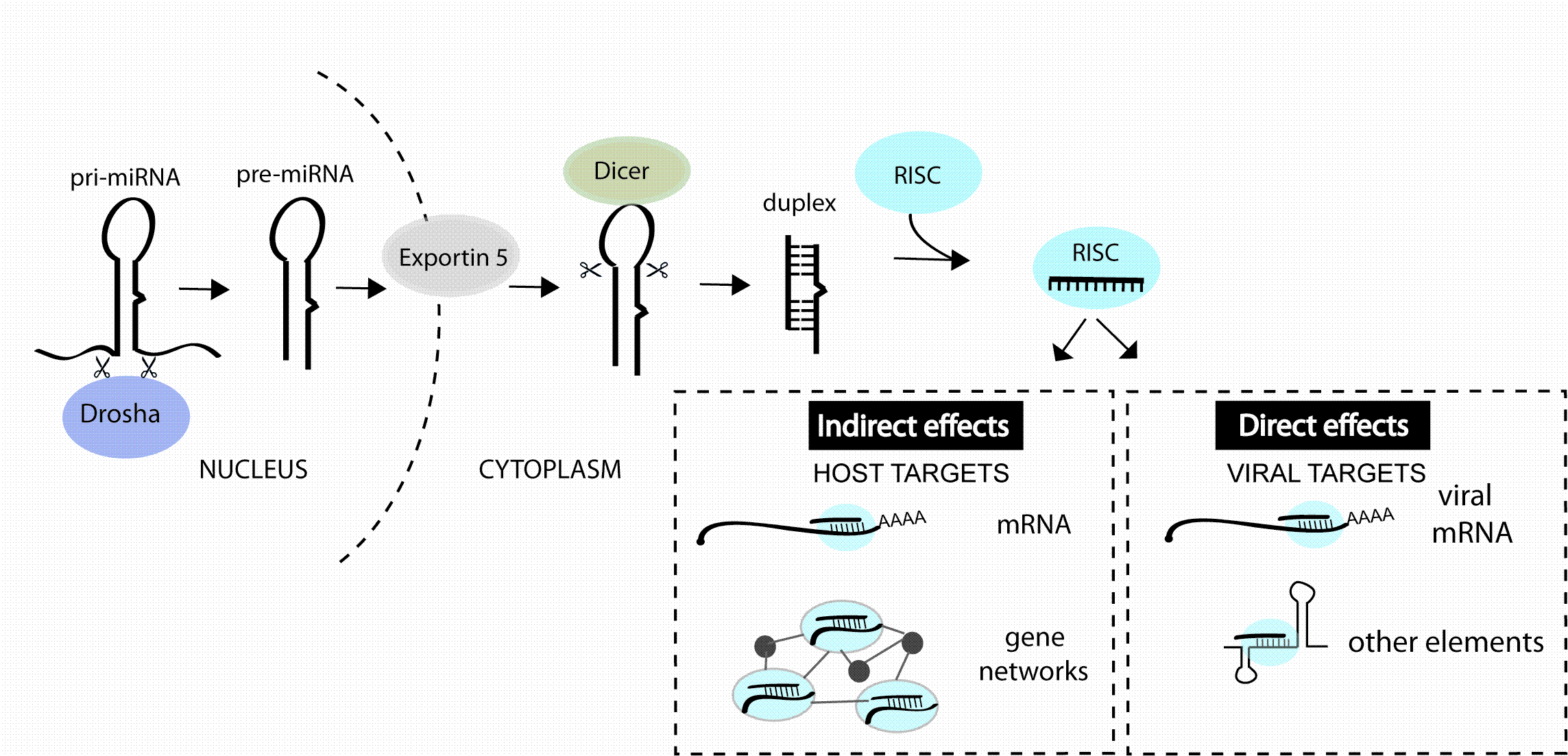
microRNAs (miRNA) are a class of small noncoding RNA that bind to messenger RNAs (mRNA) and regulate the amount of specific proteins that get expressed. These small RNAs are derived from longer primary transcripts that fold back on themselves to produce stem-loop structures which are recognised and processed by Drosha and co-factors in the nucleus followed by Dicer and co-factors in the cytoplasm, resulting in a ~ 22 nucleotide (nt) duplex RNA, for review see1,2. One strand of the duplex is preferentially incorporated into the RNA-induced silencing complex (RISC) where it then mediates binding to target mRNAs. These interactions lead to decreased protein getting produced from the transcript, due to RNA destabilisation and/or inhibited translation3 (Figure 1). miRNA-mRNA recognition generally requires perfect complementarity with only the first 6-8 nt of a miRNA, termed the ‘seed’ site4. Each miRNA therefore has the potential to interact with hundreds of target mRNAs3,4 and the majority of human protein-coding genes contain miRNA binding sites under selective pressure5. Therapeutic interest in miRNAs has been supported by studies in model organisms demonstrating key functions of individual miRNAs in cancer, cardiac disease, metabolic disease, neuronal and immune cell function6. (more…)

Unconventional RNA interference – recent approaches to robust RNAi

Issue 5 2011 / 19 October 2011 / Marie Lundbæk, Department of Cancer Research and Molecular Medicine, Norwegian University of Science and Technology and Pål Sætrom, Department of Cancer Research and Molecular Medicine & Department of Computer and Information Science, Norwegian University of Science and Technology

RNA interference (RNAi) is now a standard tool in molecular biology. Short interfering RNAs (siRNAs) for knocking down your favourite human gene are only a couple of mouse-clicks away at your favourite reagent supplier’s website. Moreover, in contrast to initial attempts at siRNA design, these siRNAs usually give potent target gene knockdown. Nevertheless, siRNAs are not always a cure-all; therapeutic settings often require combinatorial treatments and may necessitate effects that are incompatible with standard siRNAs, such as targeted gene up-regulation. Here, we review the features of standard siRNAs before describing three unconventional but therapeutically relevant approaches to RNAi: multi-targeting siRNAs, immunostimulatory siRNAs, and transcription-modulating siRNAs.

Fire and Mello coined the term RNA interference when they discovered that long doublestranded RNAs cause sequence specific gene inhibition in worms1,2. The enzyme Dicer processes such long double-stranded RNAs into short double-stranded ~22 nt duplexes with 2 nt 3’ overhangs – the siRNAs. Argonaute 2 (Ago2) then incorporates one of the siRNA strands and uses the strand as a guide to bind and cleave single-stranded RNAs such as messenger RNAs (mRNAs). (more…)

Whitepaper: An Interview with Dr. John Rossi

Whitepapers / 1 August 2011 / Integrated DNA Technologies

Integrated DNA Technologies LogoDr John Rossi is Chair and Professor of the Department of Molecular and Cellular Biology at the Beckman Research Institute of City of Hope (Duarte, CA). His research focuses on the biology and applications of eukaryotic small RNAs and, in particular, their therapeutic use in HIV/AIDS and cancer. One of (more…)

RNAi screens for the identification and validation of novel targets: Current status and challenges

Issue 6 2010 / 16 December 2010 / Attila A. Seyhan, Translational Immunology, Inflammation and Immunology, Pfizer Pharmaceuticals

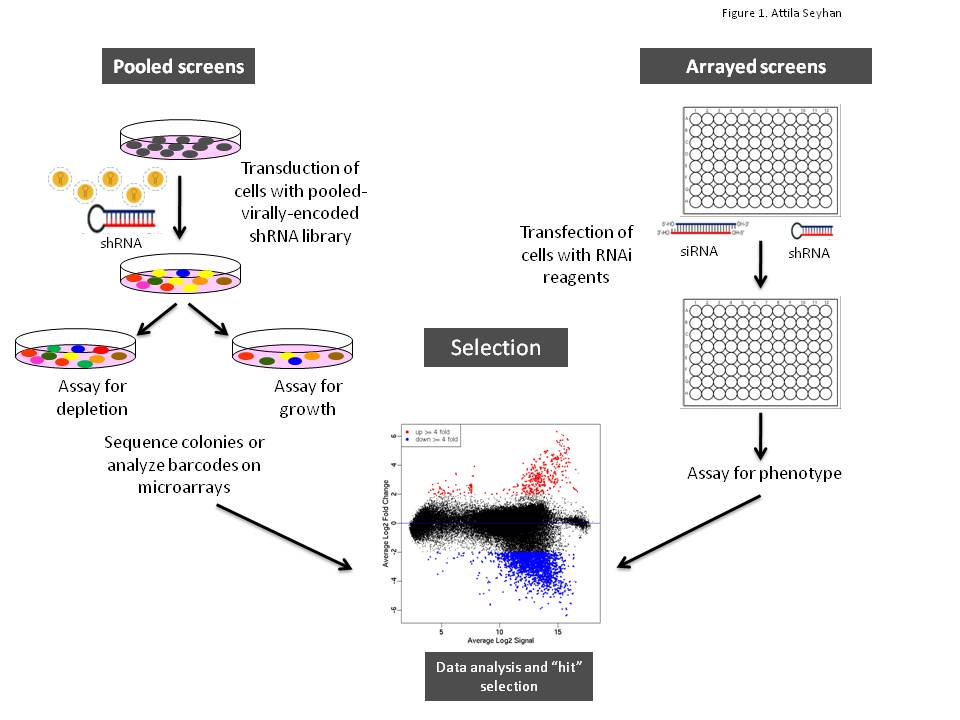
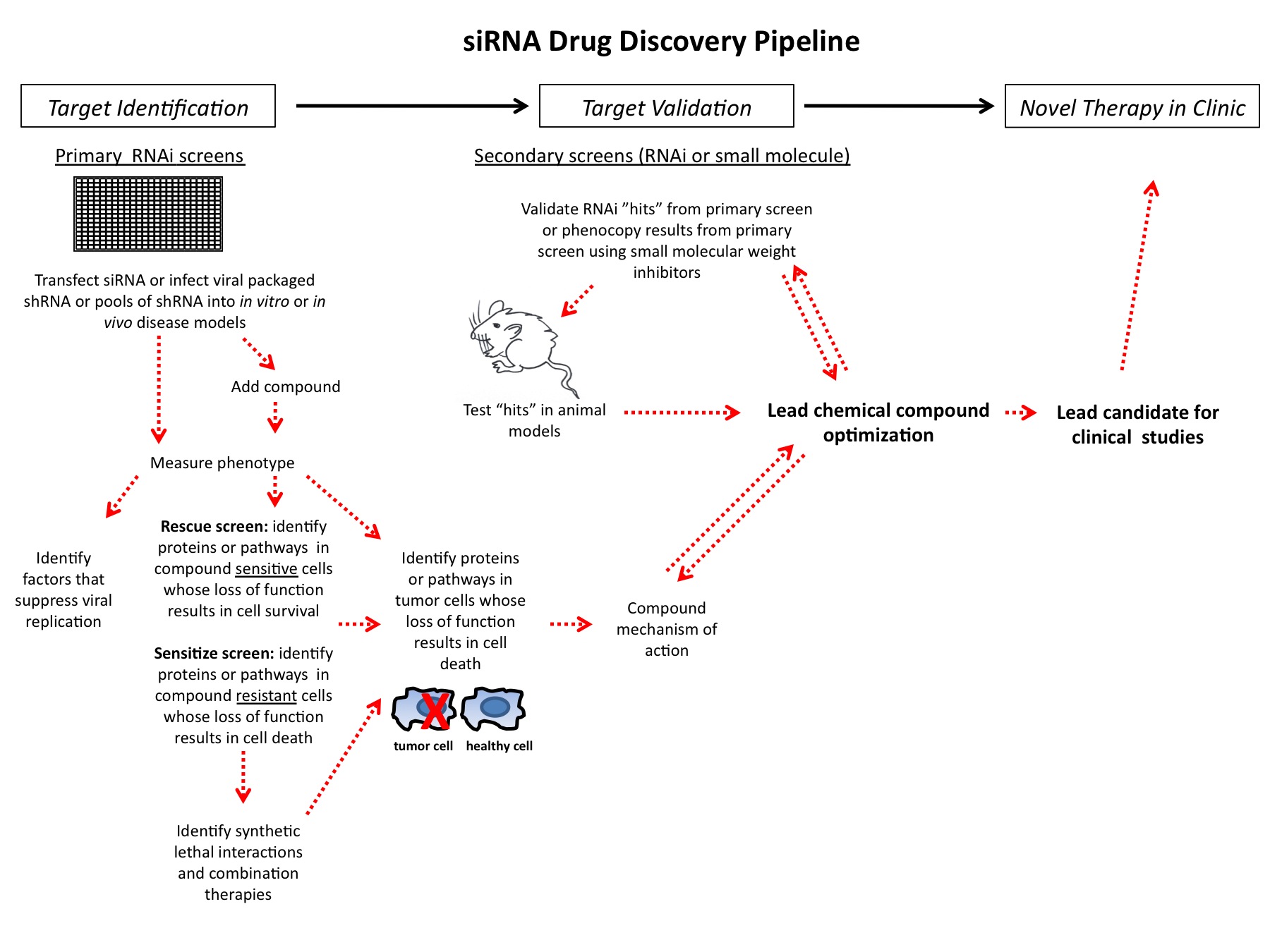
Recent advances in RNA interference (RNAi) technology and availability of RNAi libraries in various formats and genome coverage have impacted the direction and speed of drug target discovery and validation efforts. After the introduction of RNAi inducing reaagent libraries in various formats, systematic functional genome screens have been performed to query the functions of individual genes, pathways or an entire genome in many disease areas, including cancer, viral pathogenesis and others. As a consequence of these screens, novel mediators of cellular response to disease pathogenesis or treatment approaches have been identified leading to the discovery of novel drug targets, development of combinatorial treatment approaches and patient selection biomarkers. (more…)

Functional genomics as a tool for guiding personalised cancer treatment

Issue 5 2010 / 29 October 2010 / Roderick Beijersbergen, Group Leader Molecular Carcinogenesis, the Netherlands Cancer Institute

Improved understanding of the molecular alterations in cancer cells has fuelled the development of more specific and directed cancer therapies. However, it has become clear that response rates can be low due to confounding genetic alterations that render these highly specific therapies ineffective. As a result, the costs of cancer treatment will increase enormously unless we are able to identify those patients that will benefit most from these directed therapies. In addition, it will be necessary to identify additional targets in these complex molecular networks that can be further exploited to increase overall response rates in the highly heterogenic populations of human tumours. In recent years, great expectations have been put forward for the use of functional genomic screening technologies to reach these goals. (more…)

The evolution of RNAi technologies in the drug discovery business

Issue 5 2010 / 29 October 2010 / Jason Borawski and L. Alex Gaither, Novartis Institutes for Biomedical Research

In the past decade, the pharmaceutical industry has exploited the naturally occurring cellular RNAi pathway to enhance drug discovery research. The RNAi pathway, triggered by dsRNA, selectively, although not always specifically, degrades mRNA leading to substantial decreases in post-transcriptional gene expression1. Researchers have capitalised on this intrinsic pathway by synthesising RNAi reagents to modify the expression of any desired gene. RNAi libraries consisting of synthetic siRNAs or plasmid based shRNAs are amendable to largescale genome-wide screening campaigns to search for new therapeutic targets. Such loss of function screens can reveal novel targets and synthetic lethal interactions for cancer therapy2,3. These screens have also been used to identify novel host factors for diseases such as Hepatitis C4-7 and HIV8-14. Selective gene silencing can deconvolute molecular pathways implicated in disease onset and progression15. (more…)

RNAi-based therapies for the treatment of HIV

Issue 3 2010, Past issues / 24 June 2010 / Marc S. Weinberg and Fiona van den Berg, Antiviral Gene Therapy Research Unit, Department of Molecular Medicine and Haematology, University of Witwatersrand

Since the discovery of RNA interference (RNAi) in 19981 and the demonstration of RNAi in mammalian cells in 20012, research into the mechanisms and applications of this pathway has moved swiftly. RNAi is capable of mediating potent and specific silencing of genes and has therefore shown promise in the development of alternative anti-viral therapies with the potential to avoid disadvantages associated with conventional drug regimens. A number of synthetic and expressed constructs have been investigated against HIV with varying success. Despite rapid progress, important hurdles need to be surmounted before a safe, effective and widely applicable therapy can be implemented clinically. Here, we review different RNAi-based strategies against HIV and highlight future developments necessary for the realisation of an effective anti-HIV therapy. (more…)

RNAi screening in the era of high-throughput genetics

Issue 6 2009 / 12 December 2009 /

The use of RNAi screening to identify potential drug targets has enjoyed great success in recent years as a robust method for linking genes to a disease process through a functional assessment of a gene in an experimental model1. True, RNAi screening is complicated by problems such as off-target effects and toxicities associated with various properties of RNAi molecules, but effort from many groups has produced a coherent set of guidelines that are useful for most RNAi screens2-4. As such, large scale RNAi screens can be performed by moderately-resourced laboratories. RNAi screens have identified genes involved in resistance to anticancer chemotherapeutics, viral and bacterial infection and specific signal transduction pathways. Now that the technical complications have been identified and largely mitigated, RNAi screening has joined other genomic technologies, such as transcriptional profiling, as a method for broadly surveying the human genome for roles in a given disease or a response to a treatment. (more…)

RNAi applications in biology and medicine

Issue 4 2009, Past issues / 30 July 2009 /

The field of oligonucleotide-based therapy experienced a revival with the discovery of RNA interference (RNAi) in 19981. RNAi is a conserved endogenous mechanism, which is triggered by double-stranded (ds) RNAs leading to target-specific inhibition of gene expression by promoting mRNA degradation or translational repression. There are two RNAi pathways that are guided either by small interfering RNAs (siRNAs), which are perfectly complementary to the mRNA or by microRNAs (miRNAs), which bind imperfectly to their target mRNA2. SiRNAs can also induce direct transcriptional gene silencing (TGS) in the nucleus, although the mechanisms underlying this are well understood in mammalian systems3,4. (more…)

Small non-coding RNAs as therapeutics

Issue 2 2009, Past issues / 20 March 2009 /

For years biologists have worked to develop alternatives to traditional therapeutics. These efforts, in areas such as stem cell based and gene therapies, have received much fanfare in popular media outlets, raising expectations among the general public. This excitement may have contributed to the hasty progression of early gene therapy trials, which tragically led to several deaths. Despite early failures in the development of gene therapies, work in this field has continued, and the promise of life saving treatments remains.

Early gene therapy strategies consisted primarily of the introduction of a functional gene to compensate for a mutated or otherwise nonfunctional endogenous allele. While this approach is appropriate for many serious conditions, such as hemophilia and X-linked severe combined immunodeficiency (X-SCID), genetic diseases caused by the inappropriate upregulation of gene expression cannot be addressed by this method. An alternative approach designed to treat diseases caused by upregulated gene expression is antisense therapy, a process whereby an RNA molecule is introduced which hybridises to the mRNA of the upregulated gene in question, blocking its translation1. (more…)

miRNA and viral infections in vertebrates

Issue 1 2009, Past issues / 7 February 2009 /

For plants and invertebrates, RNA interference is firmly established as an important antiviral mechanism. Even before Fire, Mello, and co-workers described RNA interference (RNAi) in worms in 19981 it was becoming clear that plants have an RNA-dependent pathway that protects against viral infections2. The pathway, then termed post-transcriptional gene silencing (PTGS), helps plants like tobacco recover from initial viral infections and ensures that plants are protected from subsequent infections from the same or similar viral strains3. Subsequent studies have revealed that plant PTGS and Fire and Mello’s RNAi are identical – the triggers are short RNAs derived from long double-stranded RNAs (dsRNA)4. Incorporated into the RNA-induced silencing complex (RISC), RISC cleaves transcripts like viral messenger RNAs (mRNAs) with antisense complementary to the short RNAs.

In vertebrates, long dsRNA triggers the protein kinase R (PKR) and interferon responses which give general RNA decay and shutdown of protein synthesis. These responses are potent antiviral defences on their own and it is therefore unclear whether RNAi has the same antiviral role in vertebrates as in plants and invertebrates5. What is becoming clear, however, is that a different aspect of the RNAi pathway is important in many vertebrate viral infections. (more…)

RNAi therapeutics: addressing targets?

Issue 4 2008, Past issues / 2 August 2008 /

Gene silencing by RNA interference (RNAi) uses double-stranded RNA to shut down gene expression in cells. This provides the possibility that this new methodology could be used in the treatment of disease symptoms and disease processes. A particular attraction of RNAi (as well as other gene knockdown methods of treatment, including antisense) is that, at present, no one class of protein appears to be refractive to silencing using this method and, therefore, it has the potential to make any gene product a target for pharmaceutical intervention. As will be discussed later though, delivery of these large polyanionic molecules to their site of action may pose a significant challenge.

(more…)