
Innovative approach provides a promising alternative to culture-based methods for routine microbial surface monitoring.
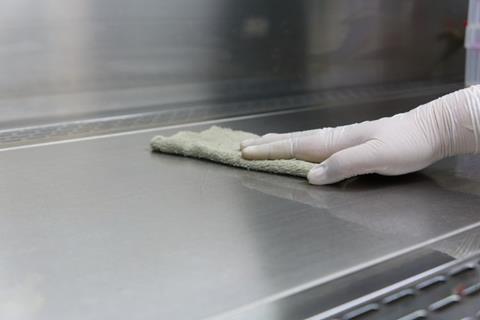
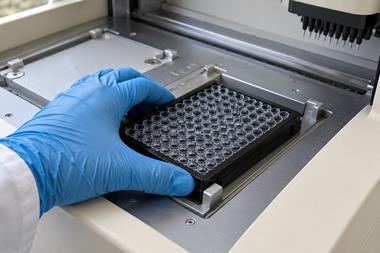
Loop-mediated isothermal amplification (LAMP) could provide a rapid, alternative method to culture-based surface microbiological monitoring approaches, research suggests.
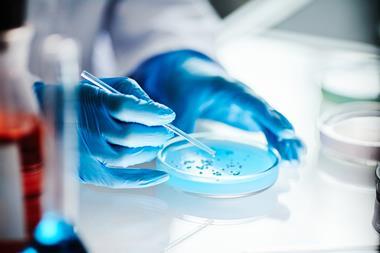
In their study, Marino et al. sampled 145 surfaces from six hospitals for three key nosocomial pathogens, Pseudomonas aeruginosa, Staphylococcus aureus, and Enterococcus spp.
After six and nine hours of incubation, the LAMP assay attained a sensitivity of 1.00 for all target pathogens.
Specificity values were slightly higher at six hours compared to nine hours: 0.93 versus 0.90 for P. aeruginosa, 0.91 versus 0.89 for Enterococcus spp., while remaining 0.92 for S. aureus, at both incubation times, the authors noted.
Compared to quantitative PCR (qPCR), a common bacterial detection method that takes several days, LAMP enables a turnaround time of 30 to 60 mins, as it operates under constant isothermal conditions (typically between 60 and 65°C).
LAMP also represents an advancement in microbial detection over current ‘gold-standard’ culture methods. These fail to identify viable but non-culturable (VBNC) organisms and thus the true microbial burden, providing “a false sense of security”, the authors wrote.
the reduced hands-on time and simplified workflow of LAMP therefore have the potential to offset its analytical cost, particularly in settings where rapid decision-making can prevent extended contamination or additional cleaning cycles”
Furthermore, they highlighted that “the reduced hands-on time and simplified workflow of LAMP therefore have the potential to offset its analytical cost, particularly in settings where rapid decision-making can prevent extended contamination or additional cleaning cycles”.
As a rapid and high sensitivity method, LAMP is “well-suited to support routine monitoring, optimise disinfection protocols [and] validate cleaning procedures”, Marino et al. shared.
It “could enable more frequent monitoring” reducing reliance on more aggressive disinfection protocols that involve chemical agents. These have a significant environmental impact, which could contribute to antimicrobial resistance (AMR).
The research paper was published in the journal Int. J. Environ. Res. Public Health.