
The chromatographic method uses ethanol as a solvent and as such, provides an environmentally-friendly approach, the paper stated.

Researchers have demonstrated a reverse phase-high performance liquid chromatography (RP-HPLC) method for the simultaneous determination of Amlodipine and Irbesartan using analytical quality by design (AQbD).
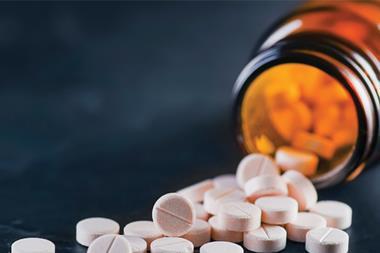
Amlodipine and Irbesartan are compounds use to treat patients with hypertension, they explained. Irbepex-AM tablets containing 150mg of Irbesartan and 2.5mg Amlodipine were assessed in the study.
Benefits of the proposed RP-HPLC method
Currently there is no working RP-HPLC technique for Amlodipine and Irbesartan that uses the AQbD methodology, according to the paper.
The RP-HPLC technique enables a “robust, cost effective and a rapid” method to estimate Amlodipine and Irbesartan in bulk and tablet dosage forms"
The RP-HPLC technique described enables a “robust, cost effective and a rapid” method to estimate these compounds in bulk and tablet dosage forms, the paper stated. The reported retention times were 2.3 and 3.3 minutes, respectively.
Notable benefits of the method include shorter retention times, wider linearity range, accuracy, high sensitivity and repeatability, the paper highlighted.
Importantly, by applying AQbD, the approach eliminates the need for regular revalidation, the authors asserted.
An environmentally-friendly approach
They shared that developing a RP-HPLC method without using organic solvents is “difficult”. However, an environmentally-friendly approach is to replace acetonitrile and methanol with alternative bio-degradable solvents.
Encouragingly, the proposed RP-HPLC technique could replace environmentally hazardous chemical modifiers with eco-friendly solvents, the authors suggested.
For example, the “unique chromatographic method” uses ethanol as a solvent. The researchers surmised that the approach has “exceptional” environmental compatibility, and it is therefore “extremely appropriate” for regular quality control.
Furthermore, “delineating the effect of ethanol volume and rate of flow on resolution increased ethanol levels and flow rates resulted in decreased resolution between the two drugs”, the paper found. In a perturbation plot, The authors illustrated the increased retention time of the Amlodipine peak with an elevated ethanol percentage. The flow rate was found to have “a negligible effect”.
The paper was published in Acta Chromatographica.