


news
New UK drug delivery centre to support RNA therapeutic development
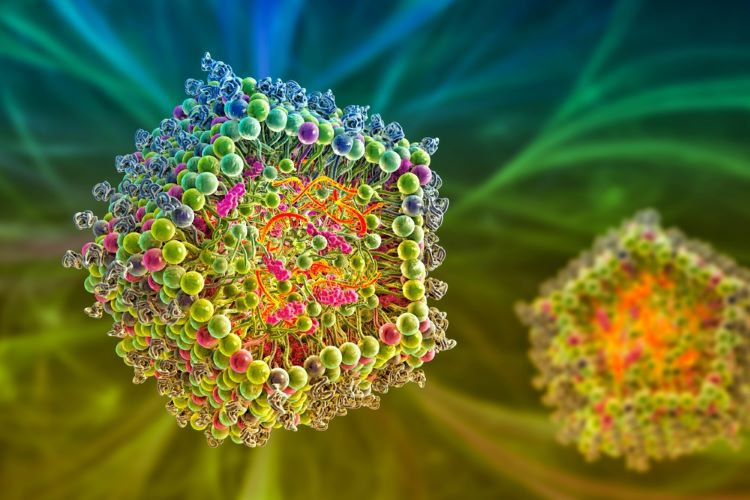
To develop new lipid nanoparticle formulations for RNA therapeutic delivery technologies, CPI and partners are working to establish a new UK Intracellular Drug Delivery Centre.
List view / Grid view
To develop new lipid nanoparticle formulations for RNA therapeutic delivery technologies, CPI and partners are working to establish a new UK Intracellular Drug Delivery Centre.


CPI has opened its Medicines Manufacturing Innovation Centre in Scotland to focus on efficient, sustainable manufacturing and advance medicine research.


Despite recent progress in women’s health issues, there are still many challenges women continue to face when accessing healthcare. Here, Alison Slingsby of HRA Pharma discusses the recent advancements made in the UK and where further development is required.


According to researchers, amphibian foam from the nests of the túngara frog could revolutionise topical, vaginal and rectal drug delivery.


A new report has shown that the pharmaceutical industry in Scotland employs nine percent more people now than in 2018.


Researchers have developed a miniature version of the musical instrument pipe organ that could be used to improve the quality of medical imaging...


This In-Depth Focus on near-infrared spectroscopy considers analysis using an innovative SAR-DRM and explores advances in technology that have an application on PAT/QbD.


Health Data Research UK is awarding £30 million funding to six sites across the UK to address challenging healthcare issues through the use of data science...
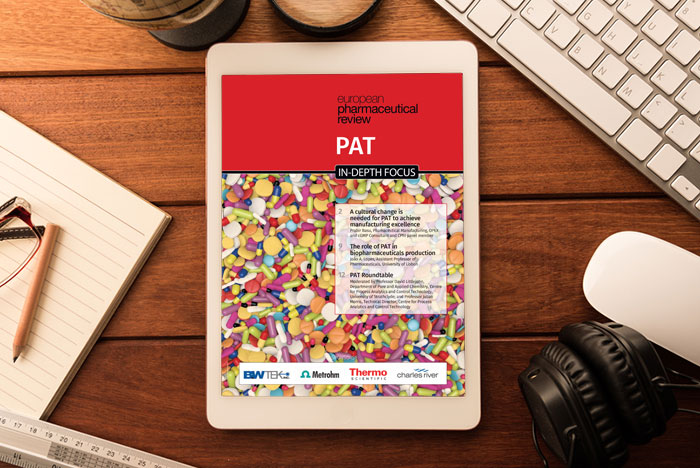
This PAT In-Depth Focus explores current challenges posed by the slow uptake of Process Analytical Technology within the pharmaceutical and biopharmaceutical industries. The advantages of incorporating PAT into the pharmaceutical process are highlighted in two informative articles, and possible solutions to its lack of popularity surmised...
13 June 2013 | By Payal Roychoudhury, formerly AstraZeneca and Ronan O’Kennedy, Fujifilm Diosynth Biotechologies and Jim Faulkner, GlaxoSmithKline and Brian McNeil & Linda M. Harvey, University of Strathclyde
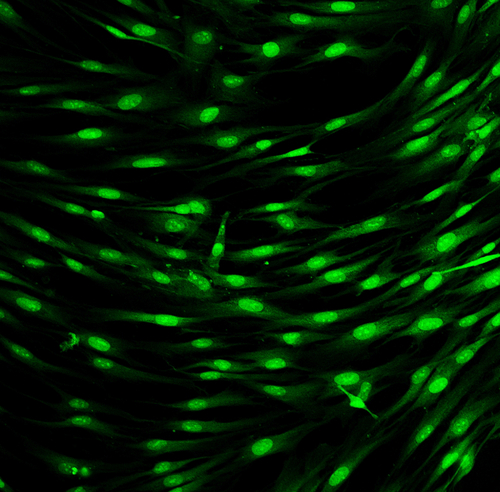
Biopharmaceutical companies are constantly evaluating new methods for mammalian cell line development that offer benefits such as shorter time lines, improved consistency, higher monoclonal antibody (mAb) production, better genetic stability and increased flexibility. Each of these advantages extends a potentially large cost benefit to companies as their recombinant protein products…


15 November 2012 | By University of Strathclyde
A Nobel Prize winner has been awarded an honorary degree by the University of Strathclyde...

31 October 2011 | By University of Strathclyde
A pioneering research institute to drive forward the search for new and better medicines to open...
19 August 2010 | By Professor Alastair J. Florence, Solid-State Research Group, Strathclyde Institute of Pharmacy and Biomedical Sciences, University of Strathclyde
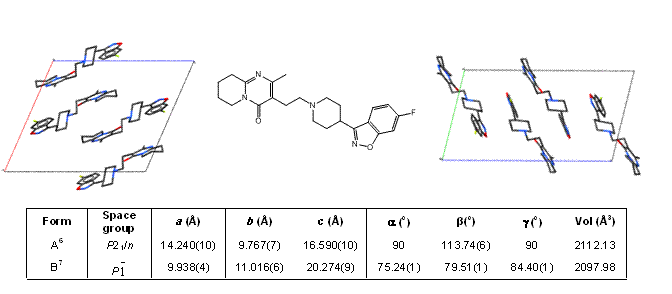
The majority of active pharmaceutical ingredients (APIs) are produced by crystallisation and so the phenomenon of polymorphism, whereby an organic molecule can adopt more than one crystalline form (Figure 1), is of considerable importance when trying to achieve consistent product quality during the manufacture of pharmaceutical solids and solid dosage…

12 December 2009 | By Gavin Halbert, Director, Cancer Research UK Formulation Unit, Strathclyde Institute of Pharmacy and Biomedical Sciences, University of Strathclyde
The manufacture of sterile products attracts the greatest regulatory scrutiny of all product types, since manufacturing failures can be fatal and manufacturers are required to utilise the most robust sterilisation method possible to limit the probability of this occurring. However, aseptic preparation, which is the last resort manufacturing method, continues…
2 February 2006 | By Professor David Littlejohn, Head of the Department of Pure and Applied Chemistry at the University of Strathclyde, Director of CPACT at the University of Strathclyde
There can be no doubt that the FDA’s initiative on Process Analytical Technologies (PAT) has had an enormous impact on the pharmaceutical industries. However, the emergence of ’born again‘ PAT devotees in pharma companies has caused mild amusement in other industries where on-line analysis has been an integral part of…

